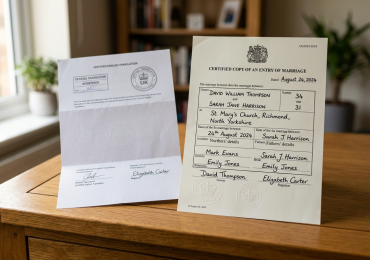
Understanding Certified Translation
Certified translation refers to the process of translating documents in a manner that meets specific legal and official standards. This type of translation is particularly crucial when documents are required for immigration, legal, or academic purposes. A certified translation typically includes a signed statement from the translator or translation service, affirming that the translation is accurate and complete. This statement is often accompanied by a certification seal, which adds an extra layer of authenticity.
The importance of certified translation cannot be overstated, especially in legal and official contexts. For instance, when applying for a visa or residency, governmental agencies require that all foreign documents be translated and certified to ensure their validity. Documents such as birth certificates, marriage licenses, and academic transcripts often fall under this requirement. Failure to provide certified translations can lead to delays or even rejections of applications, emphasizing the necessity of adhering to these standards.
Moreover, certified translations play a significant role in maintaining the integrity of information across different languages. They ensure that the meaning and nuances of the original document are preserved, which is essential in legal matters where misinterpretation can lead to severe consequences. In the UK, certified translations are particularly relevant for individuals navigating the complexities of immigration law, where precise language is paramount. Thus, understanding the nuances of certified translation is essential for anyone needing to prepare documents for official use.
Document Preparation for Translation
Preparing documents for certified translation is a crucial step that can significantly affect the outcome of your application or legal process. The first step in document preparation is to gather all necessary documents that require translation. This may include legal documents, academic records, personal identification, and any other relevant paperwork. It is essential to ensure that you have the original documents, as certified translations must be based on the original text.
Once you have gathered the documents, the next step is to review them for completeness. Check for any missing pages or sections, as incomplete documents can lead to delays in the translation process. It is also advisable to make copies of the originals for your records. When submitting documents, ensure that the copies are clear and legible, as this will aid the translator in producing an accurate translation.
Common mistakes to avoid during document preparation include:
- Submitting Unclear Copies: Ensure that the copies of your documents are of high quality. Blurry or faded documents can lead to misinterpretation.
- Overlooking Important Details: Make sure all sections of the document are included, especially if they contain critical information.
- Neglecting to Provide Context: If any part of the document requires specific understanding, provide a brief explanation to the translator.
- Ignoring Certification Requirements: Familiarize yourself with what constitutes a certified translation in your context to avoid unnecessary complications.
By following these steps and avoiding common pitfalls, you can ensure that your documents are well-prepared for certified translation, facilitating a smoother process.
Certified Translation Document Requirements
When preparing documents for certified translation, it is essential to understand the specific requirements that must be met. These requirements can vary depending on the type of document and its intended use. Generally, documents must be complete, accurate, and legible. The translator must provide a signed certification statement, affirming that the translation is a true and accurate representation of the original document.
Types of documents that commonly require certification include:
- Legal Documents: Contracts, court documents, and legal notices often require certified translations to ensure their validity in legal proceedings.
- Academic Transcripts: Universities and colleges typically request certified translations of academic records for admissions and evaluations.
- Personal Identification: Birth certificates, marriage licenses, and divorce decrees are frequently required for immigration and legal purposes.
- Medical Records: Translations of medical documents may be required for health insurance claims or medical treatment abroad.
Additionally, it is crucial to ensure that the translation adheres to the specific formatting and presentation requirements set forth by the receiving authority. For instance, some institutions may require that the translated document be accompanied by the original document or a notarized copy. Understanding these nuances can save time and prevent complications during the translation process.
How to Scan Documents for Translation
Scanning documents for translation is a vital step in the preparation process, as the quality of the scans can significantly impact the accuracy of the translation. To ensure high-quality scans, follow these best practices:
- Use a High-Resolution Scanner: Opt for a scanner that can produce high-resolution images (at least 300 DPI) to capture all details clearly.
- Check the Format: Save scanned documents in widely accepted formats such as PDF or TIFF, which preserve the quality and layout of the original document.
- Ensure Proper Lighting: If scanning physical documents, ensure that the lighting is adequate to avoid shadows or glare that could obscure text.
- Review Before Sending: Always review scanned documents for clarity and completeness before submitting them for translation. This helps identify any issues that may need to be addressed.
Recommended settings for high-quality scans include:
- Resolution: 300 DPI or higher
- Color Mode: Use color scanning for documents with colored text or images; otherwise, black and white may suffice.
- File Format: PDF for documents with multiple pages; TIFF for high-quality images.
By adhering to these guidelines, you can ensure that your scanned documents are clear and suitable for certified translation, minimizing the risk of errors or misinterpretations.
What to Provide for Certified Translation
- Original Documents: Always include the original documents or high-quality copies, as translations must be based on the original text.
- Contextual Information: Provide any relevant background information that may help the translator understand the purpose of the documents and any specific terminology used.
- Contact Information: Include your contact details for any follow-up questions or clarifications needed by the translator.
- Deadline Requirements: Clearly state any deadlines for the translation to ensure timely delivery.
To ensure completeness of submission, double-check that all documents are included and that they are legible. Incomplete submissions can lead to delays and may require additional communication with the translator. By providing comprehensive information, you facilitate a smoother translation process and enhance the likelihood of receiving an accurate and timely certified translation.
Document Preparation Guide for Translation in the UK
In the UK, preparing documents for translation involves adhering to specific guidelines that ensure compliance with legal and institutional requirements. The process typically begins with identifying the documents that require certified translation. Common documents include legal papers, academic records, and personal identification documents.
Once identified, the next step is to gather these documents and prepare them for translation. This includes ensuring that all documents are complete and legible, as previously discussed. In the UK, it is also essential to understand the specific requirements set forth by the receiving authority, whether it be a government agency, educational institution, or legal entity. Each may have different standards for what constitutes an acceptable certified translation.
Resources for finding certified translators in the UK include:
- Professional Associations: Organizations such as the Institute of Translation and Interpreting (ITI) provide directories of certified translators.
- Translation Agencies: Many reputable agencies specialize in certified translation services and can provide guidance on document preparation.
- Online Platforms: Websites that connect clients with freelance translators can also be a valuable resource, but ensure that the translators are accredited and experienced in certified translation.
By following these guidelines and utilizing available resources, individuals can effectively navigate the document preparation process for certified translation in the UK, ensuring that their translations meet all necessary requirements.
Common FAQs About Document Preparation for Certified Translation
What documents need to be certified for translation?
Legal documents, academic transcripts, birth certificates, and marriage certificates typically require certification.
How do I ensure my documents are ready for certified translation?
Follow the document preparation guidelines, check for completeness, and ensure clarity in scans.
Can I use a mobile app to scan documents for translation?
Yes, but ensure the app provides high-resolution scans and clear text.
What is the turnaround time for certified translation?
It varies based on document complexity and translator availability; typically ranges from a few days to a week.
Are there any additional costs for certified translation?
Yes, costs may vary based on document type, length, and urgency of the translation.