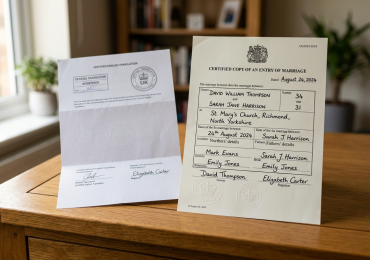
Understanding Certified Translation
Certified translation is a specialized service that involves translating documents and providing a signed statement from the translator or translation company, attesting to the accuracy and completeness of the translation. This type of translation is often required for official documents that need to be recognized by governmental bodies, educational institutions, and other entities in foreign countries. The certification process assures the receiving party that the translation is not only accurate but also adheres to specific standards required for legal and administrative purposes.
The importance of certified translation for international use cannot be overstated. Many countries have strict regulations regarding the acceptance of foreign documents, particularly those related to immigration, legal proceedings, and academic admissions. For instance, when applying for a visa or residency in another country, applicants are often required to submit certified translations of their birth certificates, marriage licenses, and academic transcripts. Without these certified translations, applications may be rejected, leading to delays and additional costs.
Moreover, certified translations help bridge language barriers, ensuring that essential information is conveyed accurately. This is particularly crucial in legal matters where misinterpretation can lead to significant consequences. For example, a mistranslated legal contract could result in a party being bound to terms they did not agree to, or worse, facing legal repercussions. Therefore, obtaining a certified translation for international use is not just a formality; it is a necessary step in ensuring that documents are recognized and accepted globally.
Why You Need Certified Translation for International Use
When dealing with international affairs, understanding the legal requirements for documents abroad is essential. Many countries require that certain documents be translated and certified to ensure their validity. This requirement can vary significantly depending on the destination country and the type of document involved. For example, some countries may require certified translations for personal documents like birth and marriage certificates, while others may extend this requirement to academic records and legal documents.
Common scenarios that necessitate certified translation include:
- Immigration Applications: When applying for a visa, residency, or citizenship, applicants are often required to submit certified translations of personal documents to prove their identity and background.
- Educational Purposes: Students seeking admission to foreign universities typically need to provide certified translations of their academic transcripts and diplomas.
- Legal Proceedings: In legal cases, certified translations of contracts, court documents, and other legal materials are often required to ensure all parties understand the terms and implications.
- Business Transactions: Companies engaging in international trade or partnerships may need certified translations of contracts, agreements, and corporate documents to comply with local laws and regulations.
In addition to these scenarios, certified translations are crucial for ensuring that documents are legally recognized in foreign jurisdictions. Failure to provide certified translations can lead to delays, rejections, or even legal complications. Therefore, understanding the necessity of certified translation for international use is vital for anyone looking to navigate the complexities of cross-border transactions and communications.
The Process of Obtaining Certified Translation in the UK
Obtaining certified translation in the UK involves a series of steps that ensure your documents are accurately translated and properly certified. Here’s a detailed breakdown of the process:
- Identify the Documents: Determine which documents require certified translation. Common documents include birth certificates, marriage licenses, academic transcripts, and legal contracts.
- Choose a Certified Translation Service: Select a reputable translation service that specializes in certified translations. Look for providers with experience in your specific field (e.g., legal, medical, or academic) to ensure accuracy.
- Submit Your Documents: Provide the original documents or high-quality copies to the translation service. Ensure that all relevant information is included, as missing details can affect the translation’s accuracy.
- Translation Process: The translation service will assign a qualified translator to your project. This translator will convert the document into the target language while maintaining the original meaning and context.
- Certification: Once the translation is complete, the service will provide a signed statement or certificate confirming the translation’s accuracy. This document is crucial for legal and official use.
- Delivery: The certified translation will be delivered to you, typically in both digital and hard copy formats. Ensure that the delivery meets your needs, especially if you require multiple copies.
When choosing a certified translation service, it’s essential to consider factors such as the company’s reputation, turnaround time, and pricing. Look for reviews and testimonials from previous clients to gauge the quality of service. Additionally, ensure that the service is accredited and follows industry standards for certified translation.
Apostille for International Use: What You Need to Know
An apostille is a form of certification that verifies the authenticity of a document for use in a foreign country. It is particularly important for documents that need to be recognized internationally, such as legal contracts, academic certificates, and personal identification documents. The apostille process is governed by the Hague Convention, which simplifies the legalisation of documents between member countries.
To obtain an apostille for your documents, follow these steps:
- Determine the Need for an Apostille: Check if the destination country is a member of the Hague Convention and if your document requires an apostille for recognition.
- Prepare Your Documents: Ensure that your documents are properly certified and translated if necessary. Only documents that are already certified can receive an apostille.
- Submit Your Documents: Send your documents to the relevant authority in the UK that issues apostilles. This is typically the Legalisation Office of the Foreign, Commonwealth & Development Office (FCDO).
- Pay the Fees: There is usually a fee associated with obtaining an apostille. Ensure you are aware of the costs and payment methods accepted by the issuing authority.
- Receive Your Apostille: Once processed, you will receive your document back with the apostille attached, certifying its authenticity for international use.
Understanding the apostille process is crucial for ensuring that your documents are accepted abroad. Failure to obtain an apostille when required can result in delays or rejections of your documents in foreign jurisdictions.
Document Translation for Overseas Use
When preparing documents for overseas use, it is essential to understand the types of documents that typically require translation. Common documents that often need certified translation include:
- Personal Documents: Birth certificates, marriage licenses, divorce decrees, and death certificates.
- Educational Documents: Diplomas, transcripts, and certificates from educational institutions.
- Legal Documents: Contracts, court orders, and legal notices.
- Business Documents: Articles of incorporation, partnership agreements, and financial statements.
To ensure that your documents are well-prepared for translation, consider the following best practices:
- Provide Clear Copies: Ensure that the documents are legible and free from any alterations or marks that could hinder understanding.
- Include Context: If possible, provide context or explanations for any specific terminology or phrases that may not be universally understood.
- Check for Completeness: Ensure that all pages of the document are included, as missing pages can affect the validity of the translation.
- Specify Requirements: Inform the translation service of any specific requirements or formats needed for the translated documents.
By adhering to these best practices, you can facilitate a smoother translation process and ensure that your documents are accurately translated and certified for use abroad.
International Document Certification in the UK
International document certification refers to the process of verifying that a document is genuine and can be recognized in foreign jurisdictions. This process differs from standard certification in that it often involves additional steps, such as obtaining an apostille, to ensure that the document meets international standards.
Standard certification typically involves a translator or translation company providing a statement of accuracy for the translation. In contrast, international document certification may require further validation by governmental bodies, such as the FCDO in the UK. This additional layer of verification is necessary for documents that will be used in legal or official capacities abroad.
Understanding the differences between standard and international document certification is crucial for anyone looking to use their documents internationally. Ensuring that your documents are properly certified can save you time and prevent issues when dealing with foreign authorities.
Choosing the Right Translation Service
Selecting the right translation service is a critical step in obtaining certified translation for international use. Here are several factors to consider when evaluating potential providers:
- Accreditation: Ensure that the translation service is accredited by recognized bodies and adheres to industry standards for certified translation.
- Experience: Look for a provider with experience in your specific field, whether it be legal, medical, or academic translation.
- Turnaround Time: Consider the time frame for completing the translation. Ensure that the service can meet your deadlines, especially if you have urgent needs.
- Pricing: Request quotes from multiple providers to compare pricing. Be cautious of services that offer significantly lower rates, as this may indicate lower quality.
- Client Testimonials: Read reviews and testimonials from previous clients to gauge the quality of service and customer satisfaction.
- Customer Support: Assess the level of customer support offered. A responsive and helpful customer service team can make the process smoother.
When you have shortlisted potential translation services, consider asking them the following questions:
- What is your experience with certified translations for international use?
- Can you provide references or case studies from previous clients?
- What is your process for ensuring accuracy and quality in translations?
- How do you handle revisions or corrections if needed?
- What guarantees do you offer regarding the acceptance of your translations by foreign authorities?
By carefully evaluating potential translation services and asking the right questions, you can select a provider that meets your needs and ensures your documents are accurately translated and certified for international use.
Frequently Asked Questions
What is certified translation?
A certified translation is an official translation of a document that is accompanied by a signed statement from the translator or translation company attesting to its accuracy.
How long does it take to get a certified translation?
The time varies depending on the document length and complexity, but typically it takes 3-5 business days.
Do I need an apostille for my certified translation?
An apostille may be required for certain documents to be recognized abroad, depending on the destination country.
Can I use a certified translation for any type of document?
Most legal and official documents can be certified, including birth certificates, marriage licenses, and academic transcripts.
What if my document is in a language not commonly spoken?
Certified translation services can handle a wide range of languages, including less common ones, but it’s best to confirm with the provider.